Towards Argumentation-based Collaborative Negotiation:
A Preliminary Report
Zhun Qiu and Milind Tambe
Information Sciences Institute and Computer Science Department
University of Southern California
4676 Admiralty Way, Marina del Rey, CA 90292, USA
{zqiu, tambe}@isi.edu
http://www.isi.edu/teamcore/{zhun,
tambe}
July, 1998
Abstract
In a complex, dynamic multi-agent setting, coherent team actions
are often jeopardized by agents' conflicting beliefs about different
aspects of their environment, about resource availability,
and about their own or teammates' capabilities and performance. Team members
thus need to communicate and negotiate to restore team coherence.
This paper focuses on the problem of negotiations in teamwork
to resolve such conflicts. The basis of such negotiations is inter-agent
argumentation (based on Toulmin's argumentation structure), where agents
assert their beliefs to others, with supporting arguments. One key
novelty in our work is that agents' argumentation exploits previous research
on general, explicit teamwork models. Based on such teamwork models,
it is possible categorize the conflicts that arise into different classes,
and more importantly provide a generalized and reusable argumentation facility
based on teamwork constraints. Our approach is implemented
in a system called CONSA (COllaborative Negotiation System based on Argumentation).
1. Introduction
The past few years have seen an explosion of
interest in multi-agent systems in general, and multi-agent collaboration
or teamwork in particular. In multi-agent teamwork, agents must plan or
act together in service of their common team goal. Unfortunately, in a
complex, dynamic multi-agent setting, such coherent team action is often
jeopardized by agents' conflicting beliefs about factors such as their
environment, overall resource availability, and their own or
their teammates' past and present performance and capabilities. Such
conflicts in agents' beliefs may arise due to a variety of reasons. First,
typically in a distributed environment, agents have access only to local
information (not global information), obtained from local sensors or information
access mechanisms. Thus, information locally sensed by one agent is unavailable
to the other agents, leading to conflicts. Second, even if the same information
is available to all of the agents, their interpretations of this information
may differ due to their distinct individual contexts, or their differing
sensor capabilities, leading to conflicting beliefs. Third, agents' individual
problem solving or planning activities may often need to proceed without
all relevant information from all others, and agents may thus produce local
plans that conflict with those of its teammates. Finally, unreliable communication
among agents may lead the sending and receiving agents to believe in conflicting
information.
While recent research on teamwork has made progress
in enabling agents to flexibly coordinate and communicate in a team, it
has so far not addressed the problem of inter-agent negotiation for
conflict resolution. This paper is focused on such
collaborative negotiations in the context of teamwork. The topic of inter-agent
negotiations has long been a subject of intense investigation in the multi-agent
literature. Beyond multi-agents, "negotiations" is well-studied topic,
in different forms, in different areas such as economics, and political
science*. Indeed, investigations inspired from economics, such as game
theoretic approaches (e.g., Rosenschein and Zlotkin [11]), dominate much
of the existing work on agent-based negotiation. However, much of this
literature has focused on negotiations among self-interested agents, that
attempt to maximize their individual utilities, rather than collaborative
negotiations within a team. Furthermore, this literature often focuses
on the outcome of the negotiation, e.g., by providing rules of encounter
or conventions that ensure that agents will not have any incentive to deceive
others. However, it does not provide guidance on constructing such agents'
internal (cognitive) processes , e.g., their representations and reasoning
employed, to enable effective and/or efficient negotiation.
Our research strongly contrasts with the above research
thread, given its focus on building agents that can participate
in collaborative negotiations in service of teamwork. In contrast
with game-theoretic approaches, our approach is based on the notion
of argumentation. Previous research in this area [1,4,8,10] has provided
several general purpose techniques for argumentation-based negotiations.
Building on this previous work, and particularly, Toulmin's
pattern of argumentation [14], we have developed an argumentation-based
negotiation system called CONSA (Collaborative Negotiation System based
on Argumentation).
The key novel aspects of CONSA, particularly in
contrast with systems of legal argumentation [4], are based on its focus
on collaborative negotiation. This focus enables CONSA to exploit
previous research on explicit, general models of teamwork [6,12], that
can provide significant advantages in investigations of collaborative negotiations.
In particular, a principled framework of teamwork enables a clearer understanding
of collaborative negotiation, and the strengths and limitations of current
techniques. For instance, such a principled framework enables an understanding
of the different conflict types that can arise in teamwork, and the extent
to which such conflict types have been addressed in previous work on collaborative
negotiations. Indeed, such categorization of differences in conflict types
is absent in previous work on collaborative negotiation. More importantly,
teamwork models provide a more detailed, yet domain-independent expertise
for agents to engage in argumentation. Such argumentation expertise is
reusable across domains. For instance, agents can reuse argumentation
knowledge based on role constraints and task relationships, or own and
teammates' responsibilities in teamwork.
2. Domains and Motivations
The motivation for current research on negotiation
is based on our previous work in complex, multi-agent domains such as real-world
battlefield simulations [13]. We have been building different teams of
synthetic pilot agents that successfully participate in combat simulations
in these environments. These pilot agent teams include companies
of attack helicopter pilots , divisions of transport and escort
helicopters pilots, and teams of autonomous pilots for the future generation
unmanned air vehicles (UAVs). The second domain is Robocup [7] where we
have twice successfully participated in the RoboCup tournaments (twice
in the top four teams). We are also investigating the role of agent
teams for disaster rescue scenarios.
These above agent teams have been developed based on a
teamwork model called STEAM [12]. STEAM is based on the joint intentions
[2] and SharedPlans [5] theories of teamwork, but with practical extensions
for monitoring and replanning as well as decision-theoretic communication
selectivity. STEAM has provided significant teamwork flexibility in all
of these applications. Yet, STEAM does not address the problem of conflicts
in agents' beliefs and relevant negotiations to resolve such conflicts,
limiting teamwork flexibility in key instances. We describe here just a
few key examples that outline some of the basic issues for collaborative
negotiations:
-
The proceed case: A helicopter pilot team in the combat simulation
environment must plan firing positions, i.e., positions for individual
helicopters to hide and attack the enemy. Typically, the commander pilot
agent plans all these positions, one per each team member, and sends each
individual planned position to the relevant team member. For instance,
a team member with the call sign "cheetah102" may obtain a position
with coordinates that hide it behind a small hill. Once all of the positions
are communicated, the commander asks its team to "proceed". Unfortunately,
in one case, one of the positions never reached a team member ("cheetah102"),
i.e., the message was sent but lost due to radio interference. Thus, the
commander thought the message was sent, but "cheetah102" never received
it, leading to a conflict in beliefs. Unfortunately, given its inability
to resolve this conflict, when the team was asked to proceed, "cheetah102"
just proceeded, without a firing position, and thus got stuck and did not
attack the enemy.
-
The firing position case: In the above firing position planning,
the commander pilot agent typically successfully plans firing positions
that are at least one or two kilometers apart from each other, as required
by doctrine. However, as individual pilots fly to those positions, they
may unexpectedly encounter enemy vehicles and react by autonomously changing
the allocated positions. This may lead pilots to take up positions that
are inappropriately close to each other. Or, two separate commanders may
plan positions that may accidentally conflict with other. In such
cases, individuals must resolve the conflict in firing positions via negotiations.
Without such negotiations, they may take up firing positions that are inappropriate
and dangerous.
-
The ball position case: In RoboCup soccer, players have limited
vision and thus inform each other about ball position. Typically, rather
than communicating precise ball position (which constantly changes), they
exchange high-level information, e.g., the defenders only inform each other
if the ball is a threat, or if the ball is cleared (and hence not a threat).
However, the players' sensors may deliver imprecise information about ball
location, due to inbuilt uncertainties in the simulation, leading to a
conflict in players' beliefs. Furthermore, the players own interpretation
of what constitutes a threat may vary, leading to a similar conflict in
beliefs. Without a negotiation capability, the agents are unable to resolve
this conflict. Thus, one defender may insist that the ball is a threat,
while another insists it is not. Defenders may thus continually exchange
these messages, without any resolution, while the ball is kicked past them
towards their goal.
-
The enemy position case: In the combat simulation environment, a
very similar situation to the one above in terms of ball position does
arise (except that instead of the ball, agents are concerned about enemy
position). The key difference here though is that there can be two or more
different enemy units, rather than a single ball as in Soccer.
As seen in these examples, while team members
do acquire conflicting beliefs, the lack of negotiation capabilities leads
to a significant degradation in their individual performance as well as
the overall team performance.
3. Analysis of Conflicts
As mentioned in the introduction, a teamwork
model provides several advantages for collaborative negotiations, including
a categorization of the conflicts types, clearer understanding
of capabilities of previous collaborative negotiation systems, and more
importantly, argumentation knowledge based on such teamwork models. Therefore,
this section provides a brief description of a principled teamwork
model (which in our case is STEAM [12]).
3.1 STEAM
STEAM is an implemented model of teamwork, aimed
at enabling development of individual agents that can engage in flexible
teamwork [12]. STEAM uses joint intentions as its basic building block
and builds up a hierarchy of joint intentions corresponding to a team's
goal or plan hierarchy. STEAM facilitates flexible teamwork via two classes
of domain-independent actions. The first class of coherence preserving
or CP actions is based on the commitments in the joint intentions theory.
It includes the execution of the establish-commitment protocol [12] to
establish a joint intention, and by requiring agents to jointly begin and
terminate joint intentions, STEAM ensure full coherence within a team.
The second class of domain-independent actions
in STEAM is maintenance and repair or MR actions, aimed at replanning (particularly
via team reorganization). One key aspect of MR actions is an explicit specification
of the dependency relationship of the joint intention on individual team
members' activities, based on the notion of a role. A role constrains
a team member vi (or a subteam) to some suboperator(s) opvi
of the team operator [OP]. Three primitive role-relationships can currently
be specified in STEAM, implying:
AND-combination: [OP] <=> opv1 /\ ... /\ opvn
OR-combination: [OP] <=> opv1 \/ ... \/ opvn
Role dependency: opvi => opvj (opvi
dependent on opvj)
These primitive role constraints may be combined, to specify
more complex relationships. All these role relationships can create a whole
role-constraint hierarchy, corresponding to an agent's plan hierarchy (see
below). CONSA, our negotiation algorithm, currently exploits this hierarchy
to guide agents to detect conflicts and generate efficient arguments.
STEAM also requires an explicit representation of a team's
plan(s) or task. For a concrete example of explicit representation
of team plans, consider Figure 1. It depicts an operator hierarchy
(similar to a reactive plan hierarchy [3]) for our Soar-based [9]
synthetic helicopter pilots developed using STEAM. One key novelty
however is team operators (reactive team plans), which explicitly express
a team's joint activities. Thus, operators shown in [] such as [Engage]
are team operators. At any point in time, one path through this operator
hierarchy is active, which is an agent's currently active joint intentions
(corresponding to team operators), and intentions (corresponding to individual
operators).
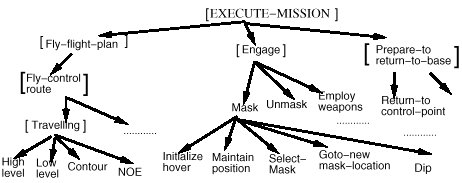
Figure 1: Helicopter pilot domain: Portion of team operator (reactive-plan)
hierarchy.
3.2 Conflicts in STEAM
Given this background on STEAM, we can now categorize
some of the conflicts that can arise in teamwork.
-
Conflicts in joint initiation of a team operator: Two team
members may have conflicting beliefs about coherently initiating a team
operator. Conflict may arise because:
-
(a) Ability: One team member may be unable to participate
in the execution of the team operator (it may not believe that the preconditions
of the team operator are satisfied).
-
(b) Preference: One team member may prefer to execute an
alternative team operator (it may have the ability, but it may still prefer
the alternative).
-
(c) Cause: Even if both members are able to and prefer to
initiate the joint goal, they may have different reasons to do this, which
sometimes lead to conflicts also.
-
Conflicts in joint termination of a team operator: Two team
members may have conflicting beliefs about coherently terminating a team
operator.
-
(a) Ability: One team member may be unable to terminate the
team operator.
-
(b) Preference: One team member may prefer to continue executing
the team operator.
-
(c) Cause: The termination may occur for different reasons,
e.g., one agent may believe the joint goal to be achieved, while
another believes it to be unachievable or irrelevant.
-
Conflicts in the execution of an individual operator: Two
agents, executing two separate individual roles may unintentionally interfere
with each other's role performance.
Since an individual operator is not initiated
or terminated jointly, the conflict here may arise not in its initiation
and termination, but in its execution. In contrast, in team operators conflicts
may arise in initiation and termination. There can be conflicts in the
execution of team operators as well. However, this is not mentioned as
a separate category, since execution of a team operator involves execution
of operators in its subgoal. Thus, execution conflicts for team operators
are essentially conflicts in the initiation and termination of team operators
that are executed in its subgoal, or conflicts in the execution of the
individual operators executed in its subgoal.
We can now re-examine the cases from Section 2. Here,
in "the proceed case", a team member's "proceed" message is intended to
attain coherence in the termination of their current team operator to "plan-firing-positions".
Thus, this is a type 2(a) conflict, due to ability. The "ball position"
case is also a type 2(a) conflict, as players have conflicting beliefs
about terminating their team operator to detect ball threat. The "firing
position case" is a type 3 conflict, in agent's individual activities.
Finally, the "enemy position" case belongs to type 2(c), since
the helicopters agree to terminate the team operator, but have conflicting
beliefs regarding enemy positions.
4. Approach Outline and Preliminary Implementation
As mentioned earlier, we have designed and implemented
an approach called CONSA for collaborative negotiations. The following
sections discuss the representations and reasoning in CONSA.
4.1 Representations of Beliefs
In devising an approach to address the problem
of collaborative negotiation, the following key issue must be addressed.
STEAM, particularly its CP actions, are aimed at maintaining coherence
in the team, and they succeed in the absence of a "true" conflict, e.g.,
where an agent sending a message has new information that unavailable to
other agents. Any approach to collaborative negotiation must accommodate
such CP actions, and not force unnecessary negotiations in the absence
of a "true" conflict. Of course, at present, the limitation in STEAM
is exactly the opposite - it fails to recognize any conflict
situations , and fails to negotiate. The new approach must thus reach a
compromise where agents may consider negotiations iff there is a "true"
conflict.
Agents' belief representation must thus enable
efficient recognition of such true conflict situations. To this end, CONSA
relies on equipping agents' beliefs with strengths. The strengths
of a belief is derived based on the evidence that supports it. For instance,
in the proceed case, the agent not receiving its firing position ("cheetah102")
can strongly believe that it has not received this position, since there
is no evidence that the firing position has been received. In contrast,
when executing the team operator [fly-flight-plan] individual team members
only weakly believe that there is no enemy on their flight path, because
their local sensors only cover a portion of the flight path and cannot
guarantee that there is no enemy on the flight path. Thus, for a given
belief Bi , an agent "cheetah102", may (i) strongly believe Bi ; (ii) weakly
believe Bi ; (iii) weakly believe not(Bi); (iv) strongly believe not(Bi).
One key novel heuristic used CONSA, in weighing presented
evidence is that an agent is expert in its own role. Thus,
if "cheetah102" states to the team that it has not received its firing
position, the above heuristic ranks this as strong evidence, since "cheetah102"
is considered an expert in its own role of receiving the firing position.
The strength based beliefs enables STEAM to efficiently
detect true conflict cases. For instance, while agent "cheetah103" may
weakly believe that there is no enemy on the team's flight path, it may
be informed by an agent "cheetah102" that it ("cheetah102") has spotted
enemy on the flight path. "cheetah103" does not treat this as a conflict,
given its earlier weak belief, and strong evidence in favor of the presence
of enemy. In contrast, if "cheetah102" had strong belief that it has not
received a firing position, it will treat any new information stating
that it has received a firing position as a "true" conflict, and
consider engaging in negotiations.
4.2 CONSA's Approach to Negotiation
CONSA can now be outlined as involving the following
steps:
Step 1: Conflict detection: Agents
do not directly accept other agents' beliefs communicated through the CP
or other communicative actions (as currently done in STEAM). Instead, they
check for conflicts, based on the above belief representation technique.
In particular, the communicating agent's belief and any supporting evidence
provided is weighed against the receiving agent's own beliefs with
possibly contrary supporting evidence. If the communicating
agent sends no evidence (if it is considered already available to everyone),
the receiving agent uses simple plan-recognition to re-construct
this evidence, and check for any conflicts.
Step 2: Decision on negotiation: Even if conflicts
are detected, agents should not automatically engage in protracted negotiations.
As the "ball position case" in Section 2 clearly illustrates, the cost
of negotiations may outweigh the benefits (e.g., the ball may be shot into
the goal by the time the defenders complete their negotiations). CONSA
relies on a decision theoretic approach to address this issue. CONSA weighs
three alternatives once it detects a conflict. First, an agent can
negotiate in detail with its teammate. Second, it can avoid the negotiation,
and just accept the teammates' belief. Third, it can refuse to negotiate,
but not accept the teammates' belief either (working with its own beliefs
instead). Under different circumstances, the cost and utility of each of
these choices will vary. In the "ball position case", the agent will reject
the first option as its expected utility is lower than the remaining two
options, given its significant cost. Thus, CONSA will terminate, and no
negotiations will occur.
Step 3: Begin negotiations: If an agent does decide
to continue with negotiation, it will send arguments to its teammate with
whom the conflict is discovered, including the supporting evidence for
its own beliefs (that conflict with the sender's beliefs).
3a: Construct the argument in support of the
agent's own belief: build a proof chain to attack the sender's conflicting
beliefs.
3b: Prune the argument: it's not always necessary to communicate
the whole argument to the other agent. Instead, those mutually believed
or easily inferred parts can be ruled out for sake of efficiency;
3c: Communicate the argument.
Step 4: Continue negotiations: if conflicts resolved,
stop; else, if conflict detected go back to step 2, but with the original
message receiver now the sender, and the sender now the message receiver.
In Step 3, agents construct their arguments in support
of their beliefs. In our approach, argumentation is based on
Toulmin's argumentation structure [14]. According to Toulmin, arguments
consist of data and claims and warrants**:
-
Claim: some conclusion whose merit we are seeking
to establish;
-
Data: the facts we appeal to as a foundation for the
claim;
-
Warrants: the authority for taking the step from the
data to the claim.
In our context, claims are the facts the agents individually
or mutually believe in. For example in a role relationship situation, the
facts that "the role relationship for a team operator T is an AND combination",
or "one of the role is fulfilled", or "the top goal has been achieved",
etc., are all claims. Warrants are the rules of actions an agent should
take based on role constraints, such as :
Warrant W*: "AND-combination (T)+ All-roles-fulfilled(T)
-> achieved(T)"
That is, for a team operator T, if it
is an AND-combination, and all of its roles are achieved
, then the team operator is achieved.
Warrant W**: "OR-combination (T)+ Any-role-fulfilled(T)
-> achieved(T)"
where T is a team operator
In CONSA, data also have supporting structure consisting
of warrants and evidence data, recursively, so we can view them as claims
also. Thus, henceforth only "leaf" claims (which have no further supporting
argument structure) are referred to as data.
Consider the case of joint goal termination (case 2, from
section 3.2) . Here we utilize STEAM's role-constraints to create warrants
and guide agents to evaluate propositions and construct counter-arguments.
In the detection step (step 1), when an agent receives
a joint-goal-completed message, it will first compare the message with
the agent's private beliefs. If no conflicts are found, the agent will
then backchain the message based on the role relationship constraints (using
applicable warrants of role constraints) to infer the sender's beliefs
in fulfillment of all relevant roles. For instance, if the message is "achieved(T)",
then from the applicable warrant "AND-combination(T) + All-roles-fulfilled(T)
-> achieved(T)" and the claim "AND-combination (T)", the agent can infer
back that the sender believes that "All-roles-fulfilled(T)" is true.
Next, the receiving agent can again compare all these
Sender's inferred claims to its own existing beliefs. If still no conflicts
are found, it will then backchain through such claims (just inferred from
last round of backchaining). In the example above, the receiving agent
will backchain through the inferred claim "All-roles-fulfilled(T)", to
generate other inferred claims for comparison with its own beliefs. In
this case, the inferred claims refer to the role fulfillment of individuals
or subteams in the operator hierarchy. This backchaining process continues
until the agent finds a conflict or reach the bottom of the tree where
the roles are already individually executed***.
When the agent finally finds a conflict between its own
beliefs and the backchained claims of the message-sending agent (and it
has decided through step 2 to start a negotiation process), it can thus
build a complete proof chain to attack the original claim from the whole
backchaining path. In most cases, this chain will be too much overhead
to communicate completely, so instead of communicating the whole chain
to the other agent as a counter-argument, the agent will go through a pruning
process to rule out the mutually believed or easily inferred components
of it and only communicates the remaining claims (step 3).
The following is now a detailed illustration of the above
approach in the "proceed" case.
Mutually known facts in the "proceed" case by all the helicopters
beforehand:
-
Warrant w1: AND combination(T) ^ All roles fulfilled (T)--> achieved(T)
-
Warrant w2: AND combination(T) ^ ~All roles fulfilled(T) --> ~achieved(T)
-
Warrant w3: ~my role fulfilled(T) --> ~All roles fulfilled(T)
-
Claim c1: AND combination(T)
On sending the "proceed" message, the commander takes the
following steps:
-
Claim c2: All roles fulfilled(T) (the commander supposes all helicopters
received their firing positions and this is mutually believed);
-
Reasoning step: c2 + c1 + w1 --> c3 ("achieved(T)");
-
Pruning: w1, c2, c1 (which are all supposed to be mutually believed);
-
Communicate: c3 (to all helicopters).
"Cheetah102" (helicopter who missed its firing position
message) reasons when it gets c3 ( the steps shown below are correspondent
with the steps in CONSA algorithm):
-
Claim ~c4: ~ my role fulfilled(T);
-
Step1. Detection step (see Figure 2 below):
-
Check the message (c3) itself and no conflicts found;
-
Backchaining: c3 + c1 + w2 -> c2 (no conflicts found);
-
Backchaining one more level: c2 + w3 -> c4 (conflict found);
-
Step 2. Decided to engage in negotiation;
-
Step 3. Begin negotiation:
-
3a. Arguments building step: the attacking chain: ~c4 + w3 -> ~c2, ~c2
+ c1 + w2 -> ~c3;
-
3b. Pruning: w2, w3 (which are supposed to be mutually believed);
-
3c. Communicate: c4 --> ~c2 --> ~c3 (back to the commander)
Reasoning process of the commander afterwards:
First, evaluate supporting and weakening arguments of "top goal achieved"(c3).
Next, decide to accept the negative branch (~c3) since c4 has more weight
in that its the area of expertise of "cheetah102" to determine if its own
role is fulfilled.
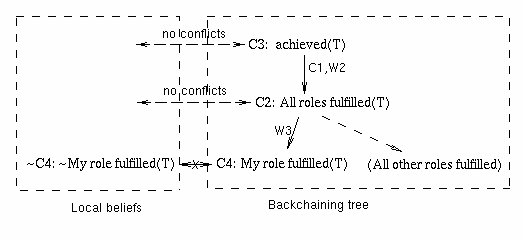 Figure 2: Reasoning process of "cheetah102" when
it received the "proceed" message
Figure 2: Reasoning process of "cheetah102" when
it received the "proceed" message
The above chart shows how "cheetah102" detects
the conflicts by backchaining down the role hierarchy. Here the left box
represent the local belief base of "cheetah102" and the right box is its
backchaining trace, where arrows illustrate backchaining steps, which can
be taken as "supported by".
4.3 Description of Preliminary Implementation
We have at present partly implemented the above CONSA
approach in the Soar problem-solving architecture [9]. This implementation
currently exploits the role relationship structures associated to every
team operator in STEAM. It fully implements step 1 and 3 of the CONSA approach
and at present only address the conflicts occurring in the termination
phase of a joint intention, by having the agents examine the role fulfillment
status through the expanded role relationship tree. It however cannot resolve
joint-goal-initiation and individual-goal conflicts as yet.
Our implementation has enabled agents to begin negotiations
in the running "proceed case". Currently we have written nearly thirty
Soar rules and below is part of the Soar outputs from CONSA's execution
trace in the "proceed" case, showing that the helicopter agent who miss
the message is now taking steps to detect the conflict and start up a negotiation
process. Here cheetah101(commander) and cheetah102 are call signs of two
helicopters, and numbers like "130" etc. are decision cycle numbers(steps)
in Soar. "O58", "O59" etc. are all executed Soar operators. For example,
in step 130, cheetah102 executes the operator O58 to begin an inconsistency
control, i.e. to engage in the process of detecting and resolving a conflict
in the team.
......
Begin inconsistency checking...
130: O: O58 inconsist-control
131: ==>S: S23 (operator no-change)
132: O: O59 make-decision
Decide to negotiate
133: O: O60 compare-message
No conflicts in saved message itself.
Doing backchaining...
134: O: O61 backchain
135: O: O62 compare-modeling
Conflicts with my belief role-fulfilled: *no* detected after backchaining.
136: O: O66 communicate-disagreement
Communicate: cheetah102 role-fulfilled *no* to cheetah101
137: ==>S: S24 (operator no-change)
138: O: O67 wait
139: O: O68 wait
.......
We can see from the above execution trace that after helicopter
"cheetah102" decided to start a conflict resolving process (step 2), it
first check the received message itself. After finding no conflict there,
the agent began backchaining and comparison (step 1). When it found the
clash with its beliefs, the agent then communicated its disagreement back
to the commander and waited for its response (step 3). Note that here we
put "make-decision" (step 2) ahead of detection part (step
1) to cut down on the overhead when the cost in the situation constrains
agents from beginning negotiations.
5. Related Work
We begin discussion of related work by focusing
on the closely related research on argumentation-based negotiation.
We will also later examine game-theoretic approaches to negotiation.
Chu-Carroll and Carberry [1] describe a computational
model that captures the collaborative planning process in a recursive Propose-Evaluate-Modify
cycle of actions. Their model is able to detect potential conflicts regarding
both proposed actions and proposed beliefs, and to initiate collaborative
negotiation subdialogues to resolve the detected conflicts. They also identify
the focus of modification, and select appropriate evidence to justify an
intended mutual belief. Parsons and Jennings [10] drew upon a logic
of argumentation to devise a system of argumentation and use it to implement
a form of dialectic negotiation. In their context, an argument is a sequence
of logical steps indicating support or doubt of a proposition. They have
a function of flattening, which can measure the set of arguments
into some metric of how favored the proposition is, by determining which
class of acceptability the arguments belong to. Freeman
and Farley [4] present elements of a theory of argumentation as a method
for providing decision support and justification for plausible reasoning
in weak theory domains. Their work is based on Toulmin schema. In this
context they describe a theory of argument as dialectical process, where
the format of a two-sided argument is used to intertwine the strengths
and weakness of support for competing claims.
One key novel aspect of our work, which differentiates
it from the above approaches is that we are focusing on collaborative negotiation
and are thus able to use rules of collaboration (teamwork model) as warrants.
This enables CONSA to begin to build a reusable system of argumentation.
A second difference in CONSA from the above approaches
(except for Freeman and Farley's work) is its basis in Toulmin's argument
structure, which facilitate the guidance for the agents to detect conflicts
and generate arguments. With reference to Freeman and Farley's work, they
have a more varied set of warrants with degrees of certainty than we have,
which may not be always sound. CONSA does not allow anything other than
deductive reasoning, although the data (e.g. of whether roles are fulfilled)
is often uncertain in our case.
Third, instead of focusing just on argumentation (as in
a legal argumentation domain in Freeman and Farley's work), we embed negotiation
in functioning systems where agents must engage in teamwork. Thus, our
agents are behaving in a team context and are designed to execute team
tasks. They must detect those conflicts that are critical to team performance,
and negotiate only about those issues. In particular, agents must not argue
all the time.
Additionally, as mentioned, we take into account the cost
of negotiation itself and utilize a decision-theoretic approach to make
selective negotiation. Furthermore, we have begun to categorize conflict
types in the context of the principled teamwork model of STEAM.
Rosenschein and Zlotkin's research [11] is representative
of a growing work on this topic based on game theory. As mentioned before,
they focus on self-interested utility maximizing agents in contrast with
our collaborative agents in a team setting. They design conventions to
ensure agents to act in certain ways, e.g. their Vickrey's auction mechanism
ensure that agents will bid without deception. However, they do not focus
on the representation and reasoning processes in negotiation. Also, they
assume that agents have complete knowledge of the utility matrix
and the precise utility function, which is hard to obtain in a dynamic
context where agents sometimes have discrepancies in utility assessment.
In addition although they focus on techniques to choose a best action from
multiple of available choices based on the utilities and so forth, how
to plan and generate such actions in the first place is still a big question.
6. Summary and Future Work
We have developed techniques to enable
agents to engage in flexible teamwork, where the teamwork may be in service
of applications such as distributed planning, as well as multi-agent plan
execution, or multi-agent design, or other such team activities. One key
problem in teamwork is collaborative negotiations to resolve conflicts
in agents' beliefs. To address the problem, we have designed and partly
implemented a system CONSA for collaborative negotiation. The novelty of
our approach is its basis in model-based teamwork, which enables us to
distinguish between different types of conflicts in teamwork, and guide
agents in taking appropriate steps to resolve such conflicts.
Our preliminary framework is based on Toulmin's argumentation
structure and is exploiting the role relationships and task structures
in STEAM teamwork model, which enables a generalized and reusable argumentation
facility. One other novel aspect of our approach is that it considers the
appropriateness and cost of negotiation/argumentation, which is non-trivial
in complex, dynamic domains.
Although we have currently assumed that the entire role
relationship structure is available to all of the agents thus the agents
can only argue about the role performance data, we could however assume
that not everything about other roles and how their combinations work are
known to all agents. This could be an interesting source of argumentation
as well in the future.
Acknowledgment
This research is supported in part by DARPA Award
No. F30602-98-2-0108, and in part by AFOSR Contract No. F49620-97-1-0501.
References
[1] J. Chu-Carroll and S. Carberry. Conflict
detection and resolution in collaborative planning. In M. Wooldridge,
J. Muller, and M. Tambe, editors, Intelligent Agents, Volume II: Lecture
Notes in Artificial Intelligence 1037. Springer-Verlag, Heidelberg, Germany,
1996.
[2] P. R. Cohen and H. J. Levesque. Teamwork. Nous,
35, 1991.
[3] J. Firby. An investigation into reactive planning
in complex domains. In Proceedings of the National Conference on Artificial
Intelligence (AAAI), 1987.
[4] K. Freeman and A. Farley. Toward Formalizing Dialectical
Argumentation. In Proceeding of the Fifteenth Annual Conference of
the Cognitive Science Society, 1993
[5] B. Grosz and S. Kraus. Collaborative plans for
complex group actions. Artificial Intelligence, 86:269-358, 1996.
[6] N. Jennings. Controlling cooperative problem solving
in industrial multi-agent systems using joint intentions. Artificial
Intelligence, 75, 1995.
[7] H. Kitano, M. Tambe, P. Stone, S. Coradesci, H. Matsubara,
M. Veloso, I. Noda, E. Osawa, and M. Asada. The robocup synthetic agents'
challenge. In Proceedings of the International Joint Conference on
Artificial Intelligence (IJCAI), August 1997.
[8] A. Mouaddib. Progressive negotiation for time-constrained
autonomous agents. In Proceedings of the International Conference on
Autonomous Agents (Agents'97), 1997.
[9] A. Newell. Unified Theories of Cognition. Harvard
Univ. Press, 1990
[10] S. Parsons and N. R. Jennings. Negotiations through
argumentation--a preliminary report. In Proceedings of the International
Conference on Multi-agent Systems, 267-274, 1996
[11] J. S. Rosenschein and G. Zlotkin. Designing conventions
for automated negotiation. AI Magazine, 15, 1994.
[12] M. Tambe. Towards flexible teamwork. Journal
of Artificial Intelligence Research (JAIR), 7:83-124, 1997.
[13] M. Tambe, W. L. Johnson, R. Jones, F. Koss, J. E.
Laird, P. S. Rosenbloom, and K. Schwamb. Intelligent agents for interactive
simulation environments. AI Magazine, 16(1), Spring 1995.
[14] S. Toulmin, The uses of argument. Cambridge:
Cambridge University Press, 1958.
* Indeed, books on negotiation date at least as far back as 2,500
years ago, e.g. Gautama's five volumes of "Nyaya-Sutra", or the "science
of discussion" was written in 550BC.
** He actually also has "qualifications" and "rebuttals" as part
of his basic argument structure, but we are not using these notions in
our approach.
*** There is an intriguing probability that if the agent have
more trust in the other agent, it may just backchain for a certain
number of rounds and accept the claim when no conflicts come out, instead
of expanding down each time to the bottom of the role relationship tree,
which may bring much unnecessary overhead.